While fashion of the fifties depicted sweeping elegant gowns and couture dresses worn by mature wealthy elitist women, the sixties style was a total deviation from the past.
Fashion was aimed at youthful trendy women with tastes and preferences for simple geometric shapes, shorter lengths, and looser fits, clothing typical of the British pop scene.
Seamstresses and tailors were beginning to lose business to the mass production of apparel manufacturers. It was a new era of fashion-on-the-go and as style began to change, using elegance as a symbol of prestige and elitism was no longer ‘fashionable’.
As life became more casual than it was in the 50’s there was a change which was also reflected in the fashion industry. There was less of the formal elegant styles of the previous decade and more of semi-formal and casuals, many of which was “mixed and matched to stylishly create different looks for different occasions”
Things were still looking bright economic wise though, and the good times that emerged in the 1950’s continued well into the 1960’s. Austerity and rationing became something of the ‘distant’ past, and many people including women became beneficiaries of the pleasant economic boom.
Commercialisation of Fashion
Suddenly, fashion was becoming commercialised. It became embraced not only by the middle class women, but by the lower class to a certain extent, especially in the Europe and the United States.
And because culture became more relaxed, the 60’s style began to feature more of the following:
Shift dresses
A-line dresses
Pill box hats
Bell bottoms
Mini-skirts and dresses
Bikinis
Trousers suits
If fashion and style of the fifties inspired individual style signatures, it blew up into enormous proportions in the sixties.
Replicating Vintage Style
Experience has taught many of us born in the forties (baby boomers) that fashion and style is cyclic. It has always been a situation where “the old becomes the new”, always, albeit with a twist.
So, to be a part of the vintage inspired fashion crowd, it’s good to know how to put together an ensemble that interprets your favourite era, replicating it in the most pleasing and fashion-forward way. This is quite easy with styles of the 60’s.
Five 60’s Look You Can Replicate
It’s fifty plus years after, but you can still reproduce the following looks today, have your own signature, and whip up a buzz in the fashion scene.
You probably remember them; the great fashion designers of the 1960s.
If you are a baby boomer, those were your teenage years and many of you certainly have a tinge of nostalgia for the swinging sixties . . . the era of kohl-rimmed eyes and false lengthy lashes; micro-mini dresses, space-age suits, and shiny patent boots; fashionable stuff that defined the face and style of the times.
They were great fashion designers of their time and so influential in the fashion scene that they easily 'called the shots' in style.
The fashion of the 1960s centred more on London and not Paris, as some might believe. It was a new look, a total deviation from the fifties style of dressing. It was further divided into several sub-cultural trends, prominent among whichever the other styles can be are these three:
Mods – modern chic look in dramatic urban styles
Hippie – a generally unisex look, flowing clothing, tie & dye fabrics, lots of flowery prints
Biba looks – floppy hats, clothing with Gothic tones, a lean towards 20’s style; very dark eye, nail, and lip make-up.
Key fashionistas of the sixties include:
Twiggy
Mary Quant
Jackie Kennedy
Brigitte Bardot
Nancy Sinatra
Edie Sedgewick
Jean Shrimpton
Famous and Sought-After Fashion Designers
1. Biba Founded by Barbara Hulanicki in the 1960s, Biba lines (which eventually included makeup) were aimed at teenagers mostly and consisted of what we may refer to as today’s high-street fashion. Her colour palette was "muddied colours of brown, sepia, grey and plum" . . . dark but rich.
Biba's "swinging London look" was affordable couture recreation and included the following styles:
Mini-skirts
Long tight sleeves
Maxi skirts
Catsuits
Gingham print dresses
Triangular headscarves
Swanky wellies
Today, if you find an authentic Biba dress, it may sell for as much as $1000
Brighton Museum and Art Gallery celebrates BIBA
2. Givenchy Though he rose to fame in the 50s, Givenchy’s fashion creations and elegant styles still reverberate in today’s scene.
This fashion designer's creations were so refined; it helped to define the 1960s refined style of the chic and sophisticated dressing of movie stars. We all remember the elegant Audrey Hepburn. She was mostly dressed in Givenchy's clothing, whether on or off-screen.
Givenchy's most famed designs includeAudrey Hepburn’s style, The Little Black Dress, which she wore in the movie "Breakfast at Tiffany’s".
3. André Courrèges Courrèges was a French fashion designer who made his 'debut' in the Parisian fashion world of the 1960s with his futuristic, youthful but "high fashion label".
His fashion creations include:
A triangle-shaped shift dress that was THE defining silhouette of the 1960s
Well-cut pants
Halter tops
Short skirts
Hip-hugger pants
Sequined jumpsuits
White mid-calf boots
Vinyl-trimmed coats and suits
Cigarette pantsuit
It is claimed that he is the designer who created the miniskirt. Authentic Courrèges pricey high fashion creations are difficult to find today, but cheaper copies of his works may be found if you can ‘wade’ through vintage clothing hunts.
4. Pierre Cardin The originator of the fifties bubble dresses, Pierre Cardin, is a very famous 60s fashion designer who created innovative, contemporary designs that bordered on the unusual and futuristic.
It was he who embraced the use of hammered metal jewellery, industrial zippers, and plastics in his creations. His famous styles include:
Thigh-high boots
Collarless jackets
Bright-coloured mini-shift dresses
The unisex cosmos suit
Skinny double-breasted suits
Slim trousers
Space-age designs
5. Yves Saint Laurent
Yves Saint Laurent, an influential fashion designer from Algeria, has had a great impact on the European fashion industry right from the early 60s till date, and it’s not uncommon to find that celebrities and models still gush over his designs even though he passed on from brain cancer in 2008.
YSL contributed to many of the sixties fashion trends. Some of his most popular clothing styles include:
Mondrian shift dress
Peacoat
Safari jacket
Women tuxedos
Blazers
Sheer blouses
Jumpsuit
Women smoking jackets
Photographic Original Press – Yves Saint Laurent 1960s
6. Emilio Pucci
This list will be incomplete without the mention of Pucci, "The Prince of Print", whose designs were mostly recognised for his trademark “psychedelic look” - electric colours, bold geometric prints, and 'clean', racy cuts.
Pucci contributed to the '60s trends like no other. Fashionable women and important personalities, Jackie Kennedy and Sophia Loren, wore his styles, and a great fan of his clothing line, Marilyn Monroe, was even buried in one of his clothes.
His popular designs include:
Palazzo pantsuits
Silk headscarves
Body-hugging mini-skirts
Silk jersey clothing
Psychedelic 'op-art' tights – a form of printed leggings
Cropped Capri Pants
Poplin shirts
Space-age-inspired air hostess uniforms
7. Mary Quant
No, Mary Quant didn’t invent the "mini" as many vintage fashion enthusiasts tend to believe. Rather, she gave the style its name by popularising it in the 60s!
Many of us have the Quant look embedded in our minds. The silhouette ensconced in a mini skirt or a mini shift dress, patent boots, coloured opaque tights, a bob-style haircut, prominent and dark eye makeup and false lashes.
To replicate the Mary Quant look today is a breeze, and you'll find a good number of fashionistas adopting the 1960s "quintessential" Mary Quant style. Her designs were pricey, and many women found them unaffordable. Nonetheless, she was regarded as one of "London’s swinging" groups.
Her designs include the following:
Star style
Colourful raincoats
Boots with detachable tops
Mix and match separates
Tight mini-skirts
Hot pants
Lounging pyjamas
Dresses/Skirts with matching colourful tights
1967 Mary Quant fashion show
Finding an original Mary Quant outfit outside of the UK would be like searching for a needle in a haystack, but replication can be achieved by looking out for the right pieces to create the perfect ensemble.
21st Century Interpretations of 60s Fashion Designs
Today, finding these famous fashion designers' originals is certainly difficult, judging by the fact that they 'styled' and set the trends for many of us fashion-conscious youths over half a century ago.
However, it is so good to know that interpretations of their designs are easy to spot in most boutiques, malls, and high street shops. That is, if you know what to look out for.
Unleash the designer in you with this premium fashion sketchbook mood board journal, crafted specially for fashion designers, illustrators, and design students. It is perfect for creating detailed fashion sketches, croquis, and stylish concepts.
Whether you are drafting seasonal fashion collections, experimenting with silhouettes, or refining your signature style, this elegant sketchbook provides a professional canvas for your ideas.
Ideal for portfolio development, fashion school, or on-the-go creatives, for inspiration.
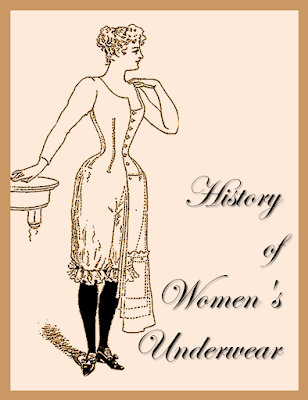
Have you ever wondered when, how, and why people started wearing underclothing? Are you curious about what underwear was like and how it has evolved over the centuries? If your answer is yes and yes, this article will enlighten you.
The history of underwear is quite interesting. It all began from wearing nothing underneath clothing to putting on beautiful frilly lingerie and now barely-there strips of under(things). Indeed, underwear has come a long way.
The Earliest Women Undergarments
The earliest recorded pieces were simple nightie-like garments called shifts, not unlike what we call a chemise. Shifts were worn by women of the Middle Ages, a period of European history spanning from around 500 AD to the 1400s. This chemise was worn underneath the outer garments, and that was it. Women of that era did not wear anything else below their daily attire.
In ancient Rome and Egypt, women tied loincloths which served as underwear. To hold the bosom firmly in place, they wound wide bands of linen fabric around their chests. This equivalent of the modern brassiere is called a strophium, tied with half-knots with the ends tucked in on the sides.
When Underwear Became Intimate Clothing
Around the 1500s to the 1600s, many women wore an item of underwear called a farthingale. It was a bell-shaped hooped petticoat with circular pads of fabric worn under the skirt to extend and shape. It was popular among well-to-do women and played a crucial role in creating the fashionable silhouette of the 1530s to 1580s.
The farthingale frame was constructed essentially from whalebone. The cheaper version was called a bum roll and was a padded roll of textile worn around the waist. By the 1600s, wealthy women began to wear silk stockings.
It was not until the early 18th-century that underwear became a recognized and necessary item of female clothing. By this time, the shift had transited into a more feminine chemise. And by the turn of the 1800s, women began to wear drawers. These are generally known as female pantaloons.
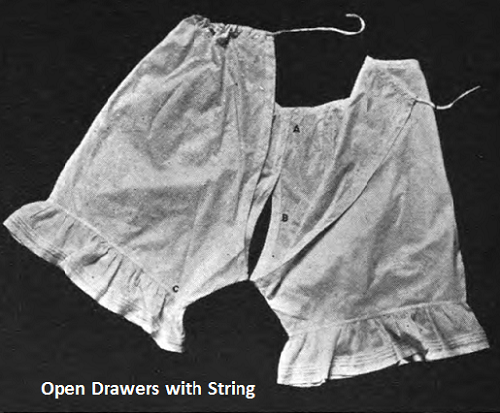
Pantaloons were long undergarments that ran from the waist to the ankle. The drawers were made from light material and finished with frilly edges and a split between the legs. In the early 19th-century, underwear was cumbersome, especially with the almost endless layers of female dresses. Perhaps this was one of the reasons why undergarments came with a split-crotch. It was easier to deal with toilette issues. But by the close of the 1800s, the closed ones gained popularity.
20th Century Undergarments and Intimate Wear
Bloomers were the most popular underwear from the early 1900s and remained popular until the 30s. They were baggy underpants fastened below (or above the knee) and known as knickers or "directoire knickers". Styled after the long pantaloons of the 1800s, they continued to be worn by older women until the mid-1950s. Bloomers were made attractive with bands, ribbon tapes, and lace.
Soon, other items of underwear and finer-structured lingerie emerged. At first, it was the modern hosiery - nylon stockings and then the brassiere (Mary Phelps Jacob designed the first concept of a bra using two silk handkerchiefs and a pink ribbon). By the forties and fifties, women began to wear briefs.
Variations of underwear have evolved almost three-quarters of a century later. However, thong-like intimate wear continues to be highly popular in the 21st-century.
A Brief Summary of Female Underclothing
100 AD - Roman women wore a subligaculum which appears like crude shorts-like wear or came as simple loincloths wrapped around the lower body. Women wore a band of leather or cloth around their chest called a strophium.
13th-Century – Women wore nightie-like garments called shifts (or chemise) under their clothing. That was about it. They did not usually wear underpants.
16th-Century - Some women wore drawers. According to historical facts, Eleanor of Toledo owned a pair of drawers in the mid-1500s. Although women wearing drawers was frowned upon by some, decades after, many were custom-made for Maria de Medici (1573–1642), the new Queen of France, but that is all we know about wearing drawers at this time.
17th-Century - Many wealthy women wore silk stockings and farthingales. A farthingale is an undergarment created to give a woman a silhouette that extremely enlarged her body from the waist down. However, it is said to originate from Spain in the 15th-century. Farthingales were used by the elite, primarily by court women displaying their wealth and status in society.
19th-Century - Women begin to wear white knickers. By the 1860s, some wore coloured knickers and petticoats but white remained popular. The underprivileged had to make their knickers from flour sacks and old clothes, and during the 2nd World War, women sometimes made their knickers from parachute silk.
20th-Century - The early years (the first decade) saw the first pair of knickers. They ran from the high-waist to around the mid-calf but by the 1920s they gradually became shorter, first rising from the calf to the knees, and then up to the mid-thighs. In the 1940s, the more fashionable women began to wear full feminine pants. Not unlike briefs, they came in a variety of styles and colours. Soon a variety of patterns followed. Thirty years after, thong underwear came to be.
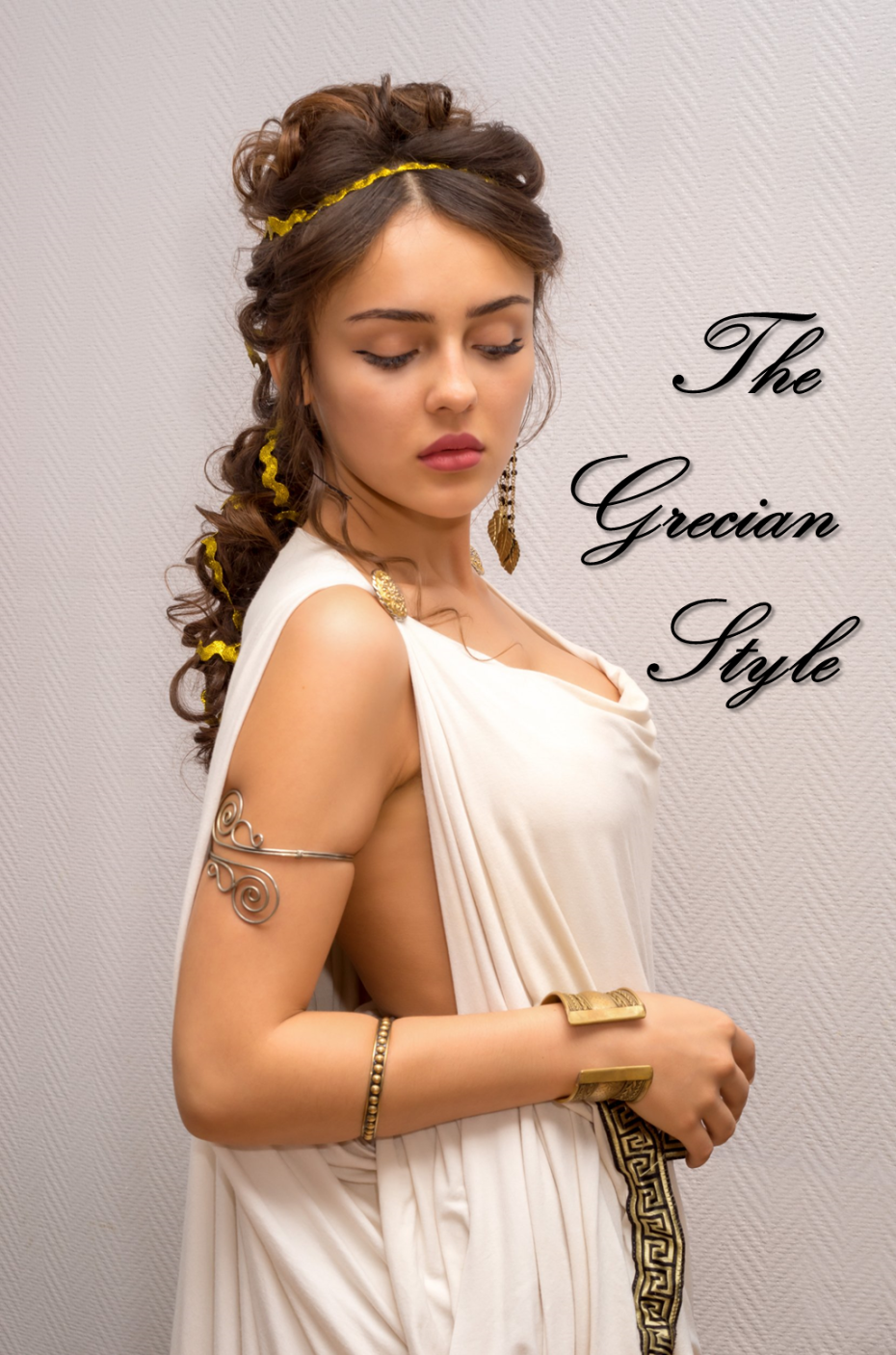
The still-elegant and fashionable classic Greek goddess dress style can be described as fluid, swathed, and elegant. Its fluidity makes it respond to every movement of the female body. It is a swathe because it gently and loosely wraps around the body. And suave as in stylish, feminine, smooth, gracious in a casually sophisticated, ethereal look.
Traditionally, the Grecian dresses of ancient Greece were primarily made of two long swathes of soft cotton fabrics draped around the body. Each piece served different functions, one was an undergarment, a chiton or peplos, and the other served as a cloak called a himation or chlamys.
Although its form and silhouette today differ from the ancient styles, dresses fashioned after the Greek Goddess attire remain timeless and body-flattering. They come in styles ranging from casual to formal and simply elegant.
Greek Goddess dress designs. Notice the apparel style of the Greek statue.
8 Ways to Dress Greek-Goddess Style
A mythical goddess-inspired dress is a sleeveless dress that cascades gently to the floor. What differs is the way the neck cuts shape out. There are a few shape variations – the V-neck, small round, and wide-off-shoulder cuts. Dresses are mainly worn at ankle length but can also come in mini and mid-calf lengths.
Because every woman’s sense of style differs, today’s version of the Grecian clothing design comes in different variations. However, the basic silhouette of a simple draping effect remains the same. It all boils down to how creative you are. Bold and daring or modest and understated.
Basically, the traditional design consisted of a Chiton or rectangular cloth, like a wide shawl, draped around the body. It can be wrapped and twisted in several ways, held in place at the shoulders with a large statement brooch. Some other characteristics typical of the style are:
1. Fabrics
2. Colors
3. Patterns
4. Detailing
5. Style
6. Headpiece
7. Hairstyle
8. Footwear
Elegant Greek woman in traditional Greek-inspired attire.
Fabrics
Soft light, breezy and sometimes sheer fabrics like silk, soft wool, chiffon, organza, satin, cotton, and linen.
Colours
Traditionally pure white, modern Grecian dress styles come in light colors, soft pastels, off-white, and champagne. There are also white and gold or white and silver combinations.
Patterns
It is uncommon to find overtly patterned fabrics made into Grecian-style dresses. Traditionally, patterns varied with the times and status of the wearer.
Detailing
For a sophisticated look, the main piece can come with gold or silver thread detailing, and the fabric sashes trimmed with ornate gold or silver rope works. A thick rope sash can replace the fabric sash as long as it holds the main dress’s folds firmly at the waist.
Style
The dress forms of Greek mythological goddesses had longer flowing gowns, unlike the shorter versions you’ll find on the statues and in images of the mystic gods of Greece. However, both forms were bound with wide sashes at the midriff. Other features include:
Asymmetrical hemlines.
Sleeveless and strapless pieces.
Cap sleeves for women who prefer to have some sleeves.
Head Piece
Although we associate the Greek dress look with headbands, the style can be accessorised with or without headdresses. With this vintage-inspired couture, you don’t need to go head-to-toe goddess look. You do not need to appear as if you stepped out of a Greek mythology fable. It is best to go with a dramatic hairstyle.
Hair Style
Add a classic hairstyle to your fashion ensemble. French plaits, Dutch braids, and fishtail braiding are great hairstyles that enhance a Grecian Goddess-style outfit. These pretty hairstyles have been around for centuries. They are mentioned in art history documents from the Early Greek, Celtic, and Sung dynasties.
French braid hairstyle.
Footwear
In ancient Greece, sandals may have been the most common type of footwear, but today, in modern trends, you do not have to wear them with your dresses and gowns. It is good to note that clunky, heavy-looking shoes are not the best footwear for this look. If you don’t want to wear sandal-like footwear, open shoes like stiletto heels, slip-ons with simple embellishments, are the best to glam up your outfit.
Important Note
If you prefer girly styles, pretty colours, frills, trimmings, and voluminous layers, then the Greek goddess style is not for you. Its timeless look, fragility, breeziness, and ethereal feel, inspired by the ancient Greek style, is definitely not for every woman.
Fashion for women was at its height in the mid-20th century. It was a time when women couldn’t wait to look good once again and certainly went all out to bring back style into their lives.
For fashion houses and fabric manufacturers, it was a great welcome back from the austere times of the 1940s brought on by the effects of the 2nd World War. During the war times, fabrics meant for fashionable clothing were in limited supplies, as were food and other things taken for granted in the pre-war years. Because everything was influenced by rationing, women's apparel was made from fewer yardages of cloth, into simple outfits using as little threads and materials as possible.
Once the war was over, there was increased availability of beautiful fabrics in vast quantities which allowed a new type of fashion to blossom by the 1950s. The good times were back again!
The Fashionable Woman of the ’50s
Stylish and well-groomed women emerged again, and this new fashion era was soon to be described as the ‘epitome of style’.
Looking good and dressing elegantly was soon the norm, and women invested in looking stylish. Every young lady was brought up to recognise and appreciate style.
1950's women fashion was the tailored silhouette, and elegant cuts that always made women look sophisticated and stylish. Styles include:
Full skirted dresses
Full swing skirts
Pencil skirts
Sleeveless blouses
Long-sleeved blouses
Tailored pants suits
Ensembles were incomplete without long coats, hand gloves, shoes, day hats, and neck jewellery like a string of faux or real pearls.
How to Replicate the 1950's Woman's Style Above
The designs of the 1950s clothes required a shapely figure with the curves in the right places . . . showing distinct hip lines and distinguishable busts.
But though the styles look best when a woman's waist is small, for those who weren't naturally endowed with a close-to-the-perfect figure, girdles, waist cinchers and general body shapers provided the desired hourglass shape required of most mid-20th-century fashion.
Prom night is always one big formal party. Call it the night of the “last hooray” before getting “thrown into the real world”. This is a night everyone wants to look good and wear the best prom dress . . . okay maybe not aspire to wear the best, but every girl aspires to be one of THE most fashionable and best dressed on prom night! Yes!
If you are full-bodied or plus sized, you may feel the skinny or slim girls get to find the best prom dresses around. You may feel that only those with trim silhouettes get the stare of admiring or envious eyes. Certainly, nothing is further from the truth!
There are beautiful and flattering prom dresses made for the plus sized girl that will blow you away! This is a special night and you too can look special as long as you choose the right fashion, design, and cut, and pick the perfect colour for your skin tone.
The Right Plus Size Prom Dress for Your Shape
If you are a plus size, your choice of style should depend on your body shape, so finding that special prom dress or gown is not really hard once you know the style that’s best for your silhouette.
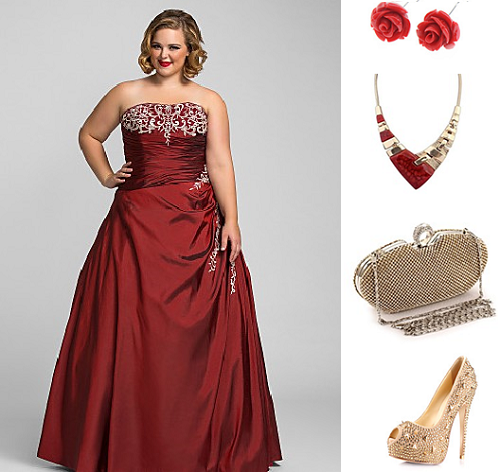
Here are the top ten plus size 'picks' for your special occasion attire, including matching fashion accessories.
1. Top Heavy Shape (Inverted Triangle) - If you are top-heavy, you don’t want a clingy prom dress but one that de-emphasises your upper body. In this case, a nice flowing A-line dress is the perfect shape. A drop-waist dress is another great style for the inverted triangle shape.
2. Brick Shape – When you have a brick-shaped body, you tend to have wide shoulders, an undefined waist, a flat bottom, wide thighs and fat calves. The best prom style dress to wear if you have this figure will be the empire dress style.
The midriff band will give the illusion of a waist smaller than the bust and hips. If you have a brick shape, you need an outfit that will give some curves. A prom dress with a flattering band around the neck will give you some “feminine roundness”.
3. Hourglass Body Shape – if you are a full-bodied figure 8, with big bosom and hips, an average length of legs, and a small short waist, you have an hourglass figure, a shape that is the envy of many of today’s women.
The mermaid style dress will look stunning on you. Ensure the fish tail of your dress is moderate though, without frills or layers.
4. Pear Shape - If you have a small waist and wide hips you will look really nice in an outfit that DOESN’T add to your hips, visually. You want something nicely clinging to your lower body while the upper part of the dress has embellishments, layers, appliques, etc…
5. Apple Shape – With an apple shape, your shoulders and bosom are narrower and smaller than your waist, which is really wider than both. Prom dress styles for this shape must be flat-fronted. There must be no layers, frills, and the like, but your ankles and shoes can be visible.
6. Spoon Shape – If you are plus sized with a ‘spoon’ shape, then you have a distinctly small waist with wide hips. However, the upper part of your body is slimmer and kind of ‘longer’.
The best style prom dress that’ll complement your shape is one that draws attention to the upper body and away from the waist and hips. This will give you an overall balanced appearance with a silhouette akin to an hourglass shape.
The Empire dress design that gently flows out below the waist looks great with this shape, and so do dresses with ruching around the upper body, or busy detailing with applique or embellishments around the bust.
7. Diamond Shape – This shape is just as it says; a diamond silhouette of sorts. The waist is wider than the bust and hips. Slightly similar to an apple shape but not so rounded, the breasts are usually small . . . medium at the most and the waistline is undefined.
The best way to dress a diamond body shape is by balancing the upper body (shoulders & bust) with the hips in such a way as to create the illusion of a waist. To pull this off successfully, choose clothing that adds fullness to your shoulder and bust while ensuring that the lower body falls straight down; no frills, no fuss; to make your lower body appear longer.
Short Dresses for the Full-Bodied
The latest and one of the trendiest styles of prom fashion is the short look. In the fashion circles for prom, many love the 'going short(er)' look. It’s not uncommon to find prom dresses in tea length, knee length and mini skirt lengths.
The buzz out there is that short is the way to go but a number of young ladies still yearns for the ballroom waltzing "Cinderella and Prince Charming" look which started to fade away by the early 21st century.
But whatever your choice of stylish prom dress may be, it’s good to plan to get something you can guarantee nobody around you will wear.
Your prom dress must be unique and striking and make you look like you belong on the Red Carpet at the Oscars!
The mermaid-style dress is classic in many ways. It can be described as a vintage-inspired dress; it is certainly designed for the hourglass (figure 8) silhouette, it's a nice reminder of the chic and elegant gowns of the mid-19th century, and it's a blast from the past . . . of classic movies where all the beautiful and sexy actresses always wore clothes that highlighted and accentuated their body shape.
Mermaid dresses, also known as trumpet gowns or fish-tail dresses, are made to fit snugly from the upper arms/shoulder of a woman's body; down the bosom to a tightly cinched waist, closely fitted around the hips all the way down to the knees where it then flares out like a mermaids tail.
The dress design is glamorous, to say the least, but can be styled from 'subtle' to 'dramatic' For instance, a subtle look may have a soft flowing tail, made from layers of delicate fabrics like silk, chiffon, or satin to form flowing "voluminous fish-tail ruffles". For a more dramatic but elegant look, a stiffer fabric like taffeta, tulle, brocade, or organza will create a stiffer fishtail dress, forming the perfect figure of a mermaid.
They can be heavily or lightly embellished with sequins, intricate embroidery, faux gems, faux pearls, metallic finishes, and Swarovski stones.
A mermaid dress is meant to be sleek and feminine, and come with long or short sleeves, puffed sleeves, 'spaghetti' straps, strapless, halter, or with a single strap, and since they all come as long dresses that sashay out at the knees, they are quite suitable to wear as:
To wear a mermaid dress AND look good in it, one needs to have an almost hourglass figure. Of course, a woman can wear the perfect body shaper to get that "magic shape", but the point is that the silhouette must be shaped like an '8' for the dress to look good.
Fish-tail Sweep Train Chiffon Evening Dress (Inspired by Rosci Diaz at the Emmys)
To 'wear the gown well,' it's best to be of average to tall height. You must have an average bust size, a slim waist, and curvy hips (not necessarily a Kim Kardashian, but close is good!), and nice straight legs too. So if you possess these shapely attributes, you have the best body shape for this vintage-inspired gown.