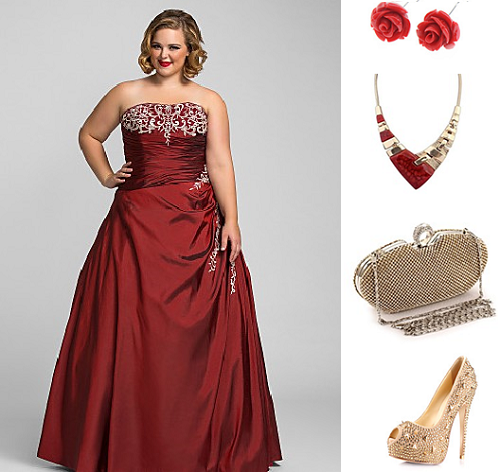
7 Body Flattering Plus Size Prom Dresses with Matching Accessories

Prom night is always one big formal party. Call it the night of the “last hooray” before getting “thrown into the real world”. This is a night everyone wants to look good and wear the best prom dress . . . okay maybe not aspire to wear the best, but every girl aspires to be one of THE most fashionable and best dressed on prom night! Yes!


If you are full-bodied or plus sized, you may feel the skinny or slim girls get to find the best prom dresses around. You may feel that only those with trim silhouettes get the stare of admiring or envious eyes. Certainly, nothing is further from the truth!

There are beautiful and flattering prom dresses made for the plus sized girl that will blow you away! This is a special night and you too can look special as long as you choose the right fashion, design, and cut, and pick the perfect colour for your skin tone.

The Right Plus Size Prom Dress for Your Shape 


 If you are a plus size, your choice of style should depend on your body shape, so finding that special prom dress or gown is not really hard once you know the style that’s best for your silhouette.


Here are the top ten plus size 'picks' for your special occasion attire, including matching fashion accessories.

1. Top Heavy Shape (Inverted Triangle) - If you are top-heavy, you don’t want a clingy prom dress but one that de-emphasises your upper body. In this case, a nice flowing A-line dress is the perfect shape. A drop-waist dress is another great style for the inverted triangle shape.


2. Brick Shape – When you have a brick-shaped body, you tend to have wide shoulders, an undefined waist, a flat bottom, wide thighs and fat calves. The best prom style dress to wear if you have this figure will be the empire dress style. 

The midriff band will give the illusion of a waist smaller than the bust and hips. If you have a brick shape, you need an outfit that will give some curves. A prom dress with a flattering band around the neck will give you some “feminine roundness”.


3. Hourglass Body Shape – if you are a full-bodied figure 8, with big bosom and hips, an average length of legs, and a small short waist, you have an hourglass figure, a shape that is the envy of many of today’s women.
The mermaid style dress will look stunning on you. Ensure the fish tail of your dress is moderate though, without frills or layers.


4. Pear Shape - If you have a small waist and wide hips you will look really nice in an outfit that DOESN’T add to your hips, visually. You want something nicely clinging to your lower body while the upper part of the dress has embellishments, layers, appliques, etc…


5. Apple Shape – With an apple shape, your shoulders and bosom are narrower and smaller than your waist, which is really wider than both. Prom dress styles for this shape must be flat-fronted. There must be no layers, frills, and the like, but your ankles and shoes can be visible.
6. Spoon Shape – If you are plus sized with a ‘spoon’ shape, then you have a distinctly small waist with wide hips. However, the upper part of your body is slimmer and kind of ‘longer’.

The best style prom dress that’ll complement your shape is one that draws attention to the upper body and away from the waist and hips. This will give you an overall balanced appearance with a silhouette akin to an hourglass shape.

The Empire dress design that gently flows out below the waist looks great with this shape, and so do dresses with ruching around the upper body, or busy detailing with applique or embellishments around the bust.


7. Diamond Shape – This shape is just as it says; a diamond silhouette of sorts. The waist is wider than the bust and hips. Slightly similar to an apple shape but not so rounded, the breasts are usually small . . . medium at the most and the waistline is undefined.

The best way to dress a diamond body shape is by balancing the upper body (shoulders & bust) with the hips in such a way as to create the illusion of a waist. To pull this off successfully, choose clothing that adds fullness to your shoulder and bust while ensuring that the lower body falls straight down; no frills, no fuss; to make your lower body appear longer.

Short Dresses for the Full-Bodied


The latest and one of the trendiest styles of prom fashion is the short look. In the fashion circles for prom, many love the 'going short(er)' look. It’s not uncommon to find prom dresses in tea length, knee length and mini skirt lengths.

The buzz out there is that short is the way to go but a number of young ladies still yearns for the ballroom waltzing "Cinderella and Prince Charming" look which started to fade away by the early 21st century.

But whatever your choice of stylish prom dress may be, it’s good to plan to get something you can guarantee nobody around you will wear.

Your prom dress must be unique and striking and make you look like you belong on the Red Carpet at the Oscars!


Further Reading:
1950s Style Couture Dresses You Can Wear for Prom (Vintage Inspired) 
Vintage Inspired Lingerie for the Plus Size
Be a Plus Size Model Even If You Think You Are Too Fat

Vintage Inspired Gowns - Mermaid Dresses

The mermaid-style dress is classic in many ways. It can be described as a vintage-inspired dress; it is certainly designed for the hourglass (figure 8) silhouette, it's a nice reminder of the chic and elegant gowns of the mid-19th century, and it's a blast from the past . . . of classic movies where all the beautiful and sexy actresses always wore clothes that highlighted and accentuated their body shape. 


Trumpet/Mermaid Strapless Sweep/Brush Train Satin Wedding Dress


Mermaid dresses, also known as trumpet gowns or fish-tail dresses, are made to fit snugly from the upper arms/shoulder of a woman's body; down the bosom to a tightly cinched waist, closely fitted around the hips all the way down to the knees where it then flares out like a mermaids tail.

The dress design is glamorous, to say the least, but can be styled from 'subtle' to 'dramatic' For instance, a subtle look may have a soft flowing tail, made from layers of delicate fabrics like silk, chiffon, or satin to form flowing "voluminous fish-tail ruffles". For a more dramatic but elegant look, a stiffer fabric like taffeta, tulle, brocade, or organza will create a stiffer fishtail dress, forming the perfect figure of a mermaid.

They can be heavily or lightly embellished with sequins, intricate embroidery, faux gems, faux pearls, metallic finishes, and Swarovski stones.


Mermaid Strapless Chapel Train Satin Wedding Dress

A mermaid dress is meant to be sleek and feminine, and come with long or short sleeves, puffed sleeves, 'spaghetti' straps, strapless, halter, or with a single strap, and since they all come as long dresses that sashay out at the knees, they are quite suitable to wear as:


Who Can Wear a Mermaid Dress?


To wear a mermaid dress AND look good in it, one needs to have an almost hourglass figure. Of course, a woman can wear the perfect body shaper to get that "magic shape", but the point is that the silhouette must be shaped like an '8' for the dress to look good.


Fish-tail Sweep Train Chiffon Evening Dress (Inspired by Rosci Diaz at the Emmys)


To 'wear the gown well,' it's best to be of average to tall height. You must have an average bust size, a slim waist, and curvy hips (not necessarily a Kim Kardashian, but close is good!), and nice straight legs too. So if you possess these shapely attributes, you have the best body shape for this vintage-inspired gown.


Vintage-Inspired Fashion: Hip-Huggers and Hipsters for Today’s Fashionistas

Hip-huggers first appeared in 1957, when Irene Kasmer designed the first pair from denim fabric. Also known as hipsters, the style had a unique cut for a typical 1950s fashion item.

(Image created by author on Polyvore.com)

Fitting snugly around the hips and thighs, waistlines were placed at the hips, rather than at the waist. They flared out below the thighs into wide bottoms. The legs were quite long, sweeping the floors as you walked. This always resulted in frayed, dirty hemlines.

Quite similar to low-rise bootcut jeans, hip-huggers became very fashionable and became a wardrobe staple in the mid-60s. The style was popularised by the mods and psychedelic groups, mainly in nightclubs. They continued to trend until the 1970s.

Hipsters and the Hippie Lifestyle


Also associated with the hippie lifestyle, the trend was (in some way) inspired by urban living, rock bands, and other music icons. Rock stars like Jimi Hendrix, Jim Morrison, Sonny and Cher, and Mick Jagger all wore hip-huggers.

The style soon became the basic wear, not only for the psychedelic group but also for pop musicians and disco fanatics.


From 20th Century Vintage to 21st Century Vintage-Inspired


Today’s version of hipsters and hip-huggers, once staples of beatnik cafés and psychedelic rock scenes of the mid-20th century, has reemerged into the fashion scene as retro-inspired streetwear.

The vintage-inspired look, popularised by the style-conscious Gen Z crowd, fashion influencers, and musicians, stems from a nostalgia for reproducing vintage fashion, but with a more stylish touch using modern textiles.

Brands that carry the design include House of Sunny, Lulu & Sky, and Reformation.

Whether you wear them to music festivals or as an everyday fashion item, the vintage-inspired look is a throwback to styles from an era of youths who dressed with purpose and personality.

How to Rock 60s-Inspired Hip-Huggers Today


To style modern hip-huggers with a vintage twist, pair them with:
  • Cropped knit tops
  • Psychedelic print shirts
  • Fringe vests
  • Platform boots
  • Big (oversized) tinted sunglasses
  • Accessories like wide belts, chunky retro rings, and small neck scarves.
You can also layer the ensemble with crochet cardigans, vintage band tees, or suede jackets to create a more authentic look that echoes the free-spirited fashion of the 1960s.

For a perfect balance, avoid wearing a total vintage look. Rather, aim for a perfect balance of vintage on the bottom and modern on the top, or vice versa.


Articles of interest
Memorable Fabulous Clothing Through Time: Antique and Vintage Fashion for Women
Ugly Vintage Clothing Styles We Will Hate to See Come Back

Vintage-Inspired Fashion for Women: Empire-Style Dress


Classic Empire-style dress.

The Empire-style dress is an old classic. It’s a style that evolved around the late 1700s, influenced by loose, white tunic clothing, belted under the bosom and worn by Greek and Roman women. 

The Empire dress design is vintage-inspired at its best! The dress has a fitted bodice with it being either short-sleeved, one-sleeved, or sleeveless, which ends just below the bust.

This is what gives the style its characteristic high waist. From below the bodice, the dress falls to the floor in a soft body-skimming (not body-hugging!) but loosely fitting way.  Fabric must be soft, light, and almost airy.

Revived in the sixties and now back in fashion, this beautiful style conceals your waistline and de-emphasises your wide hips if you have one. On the other hand, it will emphasise your bust line and give your body a slimming, longer silhouette. 

  • Wear the dress with a short or cropped classic wig or hairstyle, and if you want a softer look, go with short curls.
  • If you have long hair, there is no need to cut it off. All you have to do is wear it up high, off your face, and pile it up your head; ensure you leave loose wisps of hair around the head. 
  • For a classic vintage look as a bridesmaid, or at an evening event, if you are bold enough, accessorize with elbow-length gloves, ballet-styled shoes, or dainty strap sandals.

The empire-style dress is also great as a mother-of-the-bride-or-groom dress.

Are Vintage-Inspired Clutch Bags Back in Vogue?

The clutch is one of the chicest and exclusive of all women’s handbags. They are the most appropriate handbags for formal occasions, evening wear, or dinners, that exude sophistication whenever a lady holds one.

A vintage-inspired clutch bag with black and white stripes.
(Image used under license from iStockPhoto)


Traditionally, clutch bags were only used by women of style and panache, meaning that they were not meant for everybody or just any wear. Initially, they were small and used as money purses, but as time progressed, they became fashion accessories, worn to the theatre, special occasions, and the like.

Its use is not much different today, however, there is a wider range of clutch bags that are incorporated into casual day wear, but are still great as evening bags too.

The Art of Holding a Clutch Bag

There is an art in holding a clutch bag the right way. Fashionistas will tell you that you hold it in your left hand, close to your midriff, or held with your hand hanging down your side. Some may prefer to use it with its thin over-the-shoulder strap, but it is much more ladylike when worn without the sling or strap.

Clutch bag shapes range from small, square ‘pillbox’ shapes, to triangles, circles, tubular and heart-shaped pieces and larger-sized modern styles. Materials used range from leather and skin to satin, velvet, ornately embroidered silk and heavily embellished pieces.  

What is the good thing about clutch handbags? Their timelessness makes them a classic fashion accessory – and good thing, they are now back full circle. No woman’s wardrobe must be without a couple of clutch handbags.

Related Article

Become a Fashion Designer from Home. Study Fashion Design Online

Are you dreaming of becoming a fashion designer but don't have the time to attend an on-campus school? If you answer yes, then thank online education. Why? Because you can turn your passion into a career, working from the comfort of your home or during free periods at school or your workplace.

Online fashion design courses will give you the flexibility you need and offer in-depth, comprehensive training while developing your skills.


What are the Main Advantages of Studying Fashion Design Online? 


  • You learn at your own pace and can balance your studies despite work or family commitments.
  • You get access to the courses anywhere in the world.
  • Compared to physical attendance at school, studying online is less expensive.
  • You get a flexible schedule, especially if you have a busy lifestyle.
  • You have the opportunity to replay lessons at your convenience.
  • You will receive personalised one-on-one feedback from your instructors.
  • There will be networking opportunities globally.
  • You can develop your physical and digital portfolio as you progress with your online study.
  • You will be updated (regularly) with industry trends and working tools.

What You Need to Qualify for Online Admission


To qualify for the fashion design course, aspiring designers must have: A high school diploma or its equivalent. You must also have:
  1. Basic computer skills.
  2. A strong passion for design and style.
  3. Reliable internet connection.
  4. A laptop or desktop.
  5. Sketching tools (sketchpads or digital).
  6. A basic portfolio book showing sketches of designs (for advanced courses).
  7. Proficiency in the English language.
Design hand sketch (Image used under license from 123rf.com)


What You Will Learn


Lessons include developing a style (ideas must be practical) and refining design skills. There is expert guidance and feedback from tutors throughout the duration of the course. Key topics include:

Introduction to Sewing
Dressmaking Processes
Design and Draping
Design for Craft
Using Decorative Features
Textiles and Fibres
Embroidery and Decoration
Pattern Making, Alteration, and Fitting
Miscellaneous Garments
Fashion Sketching and Illustration
Textile and Fabric Studies
Colour Theory and Design Principles
Garment Construction Techniques
Fashion History and Trend Analysis
Digital Design Tools (Adobe Illustrator, CLO 3D Fashion Software, and Optitext)
Sustainable Fashion Practices
Branding and Marketing Strategies
Portfolio Development and Presentation


Some Fashion Designing Certificates You Can Get


There are various certificates you can get if you study fashion design online. These can range from foundational certificates in design and draping to niche-specialised certifications in fashion business management, sustainable design, and digital pattern-making. Others are:
  • Certificate in Fashion Design
  • Diploma in Fashion Illustration
  • Advanced Diploma in Garment Construction
  • Textile Design Certification
  • Pattern Making Certificate
  • Digital Fashion Tools Certification
  • Branding for Fashion Certificate
  • Sustainable Fashion Badge
  • Industry Readiness Certification

Who Will This Course Benefit? 


  1. Aspiring fashion designers.
  2. High school graduates exploring creative careers.
  3. Professionals who desire a career change.
  4. Creative stay-at-home individuals who have a feel for fashion design.
  5. Boutique owners wanting to design collections
  6. Retirees pursuing passion projects.
(Image used under license from 123rf.com)

Gain worthwhile qualifications and get a foothold in the fashion and style industry as a qualified fashion designer. Or brush up your rudimentary creative skills so that you can move up the ladder of the fashion design industry. Take advantage of today's fashion demands and study fashion design online.

Fashion, as we all know, is all about being stylish and gorgeously dressed, so the enormous demand for fashionable apparel makes fashion design a highly lucrative and attractive career, with jobs in the industry increasing year after year. So, start your fashion career now. Bring your creativity to reality. Become a professional fashion designer by studying online.

Workbooks for Fashion Design Students


Mood Board Pages for Fashion Designers: Fashion Design Portfolio Organizer Sketchbook Journal

Vintage Paris 1893: Old-Fashioned Cream Paper Sketchbook Journal for Fashion Designers

Fashion Design Portfolio Book with Title and Description Pages with Svelte Female Figure Templates


Be a Step Ahead of Your Peers. Start Your Fashion Website


And if you plan to start a fashion blog or website now, just like other forward-thinking aspiring designers, this is your chance to get your memorable domain name. It's a wonderful idea to blog about your career path and journey to becoming a fashion designer, even before you graduate. The fashion domain names listed for sale on Sedo.com are:


It's not too early to make your mark in the fashion world. Start now!


Articles of Interest7 Famous Fashion Designers of the 1920s

Vintage Inspired Fashion Accessories

What do we like about fashion accessories? There is no longer one style being in or out of fashion and neither is there a particular trend that one must follow. The beauty of accessorising is that you can create your own unique style by blending, for instance, vintage-inspired accessories with today’s modern trends.

From hats popular in the first half of the 20th-century, to flapper style shoes, flamboyant costume jewellery, box handbags, long strings of beads, chandelier earrings, and Lucite clutch bags, if you like to blend the past with the present, create your own fashion signature and combine your attire with vintage style accessories.

You can accessorise tastefully even with the simplest shift or A-line dress. The powerful statement that vintage style accessories give when worn with simple modern clothing, is the common thing that binds vintage fashion diehards and enthusiasts.


Vintage Inspired Rings by Viryabo@polyvore

Stylish women want a deviation from the dominance of designer labels and high street fashion and know that clothes can be simple and understated, but with the right accessories, any ensemble can look chic, and sophisticated. Vintage-inspired accessories are good for creating this look.

If you are not quite sure of how to put it together, search for ways to accessorize the ‘old-fashioned style, chic and elegant. There are so many illustrations, photos, and pictures of fashionable women of the 1900s to the 1960s online. You can draw inspiration from these and old fashion and style magazines, and brochures.

What Accessories Should You Be Looking For?


You’ll first need to know what look you want, classic retro, bohemian or swinging? But then it doesn’t matter what look you want to pull off. You will find that having a few of the pieces in your wardrobe will help you add style to your entire outfit.

To know what fashion accessories to consider buying, check out fashion accessories inspired by designs that were created nearly a century ago. Pull off a classic look with a Cloche hat, cross-strap shoes, or a collaret.

Here is a list of items to consider if you are looking for vintage-inspired fashion accessories:

Handbags
  • Canvas satchel bags with floral, polka dots, or animal prints
  • Small sequined or beaded bags with shoulder straps
  • Tapestry or embroidered handbags
  • Handbags with Parisian streets print
  • Lucite bags
  • Evening purses "encrusted" with mother-of-pearl, sequins, exquisite beads and rhinestones.
  • Wooden box purses
  • Two-buckle bags
  • Bucket handbags
  • Clutch bags
  • Quilted handbags
Shoes (with mid-height heels)
  • Peep-toe court shoes
  • Embroidered shoes
  • Floral print court shoes
  • Mary Jane flapper shoes
  • Ankle strap open-toe high heels
  • Dorothy shoes
  • T-bar shoes
  • Shoe-boots
  • Oxfords
Hats and Other Headpieces
  • Saucer hats
  • Retro pleated hat
  • Pillbox hat
  • Turbans
  • Barbour hat
  • Sun hat
  • Cloche hat
  • Feather hat
  • Edwardian feather hats
  • Ruched hats
  • Bowler hats with bows
Costume Jewellery
  • Brooches and pins
  • Chandelier earrings
  • Retro bangles
  • Tassel necklaces
  • Tie drop necklaces
  • Ribbon (tie neck) jewellery
  • Large statement rings
  • Moonstone rings
  • Pebble beads
  • 'Rockability’ jewellery
  • Ornate hat pins
  • Charms bracelets
Belts
  • Retro belts
  • Chain belts
  • Cinch belts
  • Pleated belts
  • Big buckle belts
  • Skinny slim retro belts
  • Boho belts
  • Tassel belts
  • Elasticated metal belts

Why Accessories are Important to Enhance Your Style


Fashion accessories are what makes dressing up complete and powerful. A unique accessory makes your choice of clothing look good, stylish, polished and totally “whole”. They add sophistication to apparel and many fashionable women have created their own bold fashion signatures just by being particular about their choice of fashion accessories.

Vintage-inspired fashion accessories can be bold and daring, opulent or simple, but basically, wearing the style is considered chic and classic.

Just as some fashion accessories inspired by antique and vintage styles come in the most unique hues and colour combinations, others come in calmer earth tones, antique metal colours, and intricately designed works typical of an era that took fashion and style quite different from how we do today.

And because today's trends lean towards the mid-20th-century styles, many fashion-conscious women are quite satisfied to make their choice amidst hundreds of vintage-inspired fashion accessories found in the online market.
 

Dressmaking Patterns of Vintage Clothing


Authentic vintage dressmaking patterns are not so easy to find these days, especially sewing patterns of clothing designs from over three-quarter of a century ago.

These are not the kind of things you’ll find in shopping malls but you may be lucky to find a rare few in flea markets or at local street markets that open only one or two days a week.

Such markets where you will likely find vintage dressmaking patterns include marketplaces and arcades like The Vintage Market and Portobello Market in London; Edith Machinist (Lower East Side) and The Market NYC (Greenwich Village) in New York and Long Beach Antique Market and Arts District Flea in California. But most people looking for genuine vintage clothing patterns, especially the unopened ones, probably don’t live anywhere near these locations.


So, if you, like many of us really want patterns of the stylish 20th-century apparel designs but can’t find them around where you reside, your best option is at online stores that retail sewing craft item – places like Etsy, eBay, Amazon, and Vintage stores. Granted, you may have to devote like a half-hour (or more) to find what you are looking for. Genuine patterns are, of course, rare finds.


Vintage Inspired Sewing Patterns


Obviously, unused vintage authentic patterns (Simplicity, Vogue, Butterick, McCall, etc…) are rare finds so the next best thing is to buy vintage inspired clothing patterns which are reproductions of vintage styles. They are much easier to find online and available designs abound. You can get one for that flapper style you’ve been yearning for.

So, whether you are looking for dressmaking patterns of a 20s tango dress, a Victorian wedding dress, a Mary Quant frock, a retro jumpsuit, or a fifties Chanel jacket, buying reproductions of vintage sewing patterns is always your best choice.


Further Reading:

How to Dress Like a 1950s Woman

How to Dress in Flapper Inspired Style - 1920s Vintage Fashion

Clothing Styles We Will Hate to See Come Back

If you that have a penchant for sewing and dressmaking (either acquired or inherent) you may even be able to create your own patterns after viewing pictures, brochures, or photographs of stylishly dressed women of about a century ago. Pattern making is also easier to do if you are a fashion designer or an aspiring one.

If you search online, you will find an arsenal of pattern making books and tools that will be of tremendous help if you intend to make your own clothing patterns imitating the fashion of a glorious era.

However, if you are like most of us that love the unique but can't stitch two strips of cloth together, you can get a dressmaker or a friend/family that’s good in the art of pattern making or sewing or you can also employ the services of professional couture dressmakers or tailors, albeit for a hefty fee.

Popular paperback pattern making books you’ll find helpful include the following:
  • Patternmaking for a Perfect Fit: Using the Rub-off Technique to Re-create and Redesign Your Favourite Fashions
  • BurdaStyle Sewing Vintage Modern
  • How to Make Sewing Patterns
  • Basic Patternmaking in Fashion
  • Woman's Dress - A Collection of Vintage Articles on Dressmaking, Millinery and Tailoring

Retro Clothing and Other 1960s Inspired Styles

Retro styles always make a come back. They are timeless, and that's the reason why many of today's fashion designs are retro-inspired, throwbacks from the 1960s.

Fashion runways showcase them. Models display them. And designers draw inspiration from the fashion legends of the era, like Mary Quant, Ossie Clark, Biba, and Yves St. Laurent.

In the early sixties, women mainly wore spillover styles from the 1950s. Clothing designs were prim, simple, and proper, typical of outfits worn by style pacesetter, Jackie Onassis. But this soon changed.

The 1960s cultivated a new breed of fashion designers. They were open-minded and adventurous enough to experiment, and body-proud to show more skin than ever before.


Retro-Inspired Style

Clothes

Fashion became casual-like. Less emphasis was placed on style. Clothes became casual, playful, and free-spirited. Examples include:

  • Shorter skirts
  • Higher boots
  • Baby-doll dresses
  • Rompers
  • Jumpsuits
  • A-line mini dresses and frocks
  • Polka dot patterns
  • Bell-bottom pants.

Prints were popular, and so were bold colours, psychedelic patterns, and textures. These were the hallmarks of retro clothing and fashion accessories.

The retro-style skirts and dresses varied in length. There were extremely short mini, micro-mini, calf-length midi, and full-length maxi outfits.
 

Jewellry

Sixties jewellery was bright, bold, and playful. While pop art and mod influences brought geometric shapes, the late sixties hippie styles leaned toward peace signs, natural stones, and love beads. Other adornments include:

  • Oversized hoop earrings
  • Bright plastic bangles
  • Chunky bead necklaces
  • Brooches (shaped like flowers or animals)
  • Colourful Lucite and enamel earrings

Handbags

Handbag designs ranged from classy to quirky, and boxy top-handle purses (in leather or vinyl) were for everyday use. Others include:

  • Colourful clutch bags
  • Chain-strap shoulder bags
  • Fringed suede bags
  • Embroidered crossbodies
  • Mini bag

Footwear

Shoes in the 1960s were as dynamic as the decade. They were fun and exciting, and they included:

  • Go-go boots (in patent leather)
  • Kitten heels
  • Mary Janes
  • Platform soles
  • Sandals and moccasins (late 60s)
 

Hairstyles

Hair of the retro-sixties was all about volume and variety, with many hairstyles made popular by silver screen actors. They include:

  • Pulled-back ponytail
  • Ducktail
  • Pompadours (hair swept upwards from the face and worn high over the forehead)
  • Beehive (big, bold, and backcombed to the skies!)
  • Sleek bobs and pixie cuts
  • And of course, hair accessories like headbands and scarves were extremely popular.
 

Post-Retro Fashion


By the end of the decade and into the 1970s, the hippie movement began and with it came long flowing maxi dresses and skirts. Outfits were anything but stylish. They were seen as a less proper way to dress.
 

How to Be Retro Fashion-Inspired


Wearing this style is a little more difficult to pull off than other vintage-inspired styles. Although retro styles are kind of conservative, with no trims, lace, fancy frills, or embellishments (faux pearls, sequins, beads) typical of the early 20th century, if you are looking for some special occasion wear, they aren’t elegant or chic. But paired well with modern clothes and accessories, you can create an awesome look.

If you want that free, happy, retro look, get clothes that feature fun, whimsical prints, the type that modern styles simply don’t have.

They’ll be perfect for a vintage-modern blend. Having any of these pieces in your closet, you will get the perfect vintage-inspired style.

  • Bell-bottom jeans
  • Oversized sunglasses
  • Fedora hats
  • Funky jackets
  • Gloves
  • Scarves
  • Flares
  • Slim-fit shirts
  • Fly collars
  • Block heeled footwear
  • Low-rise and hipster pants

To add drama to the look, try retro-type makeup. Make-up was generally heavy, with dark eyeliners, luscious red, dark, or black lipstick, and black nail polish. Retro-inspired fashion enthusiasts still wear much of this heavily made-up look.

Memorable Fabulous Clothing Through Time: Antique and Vintage Fashion for Women

Fashion trends may come and go, but they often circle back. Even if you didn’t live through the 20th century, you’ve probably seen echoes of its style in the classic silver screen, old TV sitcoms, and black-and-white midnight movies. You will agree that the styles of the first half of the century were rich in timeless elegance.

As they say, history repeats itself, and it is never truer than in fashion and style. Many are reincarnated today, but with modern twists.


(Image created by viryabo@polyvore)

Antique and Vintage Clothing


In the fashion world, antique clothing refers to apparel and accessories that are over a century old, while vintage fashion refers to pieces that are less than 100 years old. This post is about antique and vintage women's fashion styles of the 1900s.

1900s to 1920s Antique Fashion


At the turn of the 20th century, dresses swept the floor, not unlike today’s trend. By the end of the first decade, skirts started to rise to a point where you got a peek of the ankles.

Sleeves were puffed, blouses frilly and often embellished with lace collars and wide ribbon ties. Skirts fitted over the hip and fluted out towards the hemlines.

The S-bend corset was a must-have in the early 1900s. It thrusts the hips backwards, bringing the chest forward, forming a pigeon shape.


The 1910s fashion brought on looser and less cumbersome gowns. The full-length, fanciful dresses were replaced with more practical and comfortable ones.

By the 1920s, fashionable outfits became shorter and even more comfortable. There were elaborately beaded dresses, short or no sleeves, glitzy headbands, and even blouses and trousers. Corsets and bustiers became a thing of the not-too-distant past. They had lost their place in a woman’s closet.

The most memorable vintage fashion trend of the 1920s was undoubtedly the flapper dress, a chic tunic-like attire that flattened the bust line rather than accentuated it. It remains one of the vintage favourites today.


1930s to 1950s Vintage Fashion


The flapper style with its loose drop-waist (and embellished) designs soon gave way to graceful silhouettes in the early 1930s.

Couturiers designed simple outfits with bias cuts and low-scooping backs. It created slinky fluid looks that appeared to skim over a woman’s curves. Satin was the popular fabric for this style.

Wool suits, jackets with collars and shoulder pads, and knee-length skirts with fluting were popular daywear. Cardigans and sweaters were worn with day skirts or trousers. Small pert hats with feathers or floral details were trendy.


The late thirties (1939) to the end of the war in the mid-forties (1945) were austere times, and the shortage of everything, including fabrics, affected the fashion scene. There were no more fancy outfits, no more ornate trimmings, and definitely no more embellishments. Dresses and skirts were simple and fell just below the knee, and they were worn with boxy jackets with padded shoulders.

Not long after the war ends, the fashion scene comes alive again.

Initially, women wore pretty tall hats with flowery patterns, but then, wide saucer-shaped headwear soon became the trend. Jackets with softer sloping shoulders replaced the past’s boxy ones, and cinched-waist skirts became longer and fuller.


It’s the 1950s, and apparel styles continued from the late forties. However, skirts became fuller with cinched waists, and jackets/tops had sloping shoulders. Soon, the 50s woman’s silhouette transitioned into the narrow look with the pencil skirt, followed by swing dresses and full-circle skirts made with plain or floral print fabrics. Separates worn with waist-length cardigans were also popular.

Hats also changed, and the famous pill-box headwear became the trend. The saucer-shaped, wide-brimmed hats of the late 40s, though modified, remained in fashion.


Fashion of the 1960s


In the 1960s, the miniskirt and dress blazed a trail in the fashion world. Young fashion designers of the 1960s, such as Mary Quant and Biba, designed and provided clothes primarily for the youth. Then there was the hippie movement in the United States towards the end of the decade.

Fashion consisted of vibrant colours, bold patterns, and textures borrowed from other cultures.

For the older conservative women, dressing still leaned towards the below-the-knee skirts, tailored jackets, and cardigans.

Just before the seventies, fashion changed considerably. Styles that were influenced by other cultures evolved.

Several designers embraced tie-dye in the 1960s, reflecting the era's counterculture and new fashion trends. The movement showed the era's counterculture and new fashion trends. It was also the time of Mexican tops, folk-embroidered blouses, capes, ponchos, and gauchos.


1970s Clothing Styles for Women


The 70s were the era of hot disco scenes! It brought denim and neutral tones into the spotlight, alongside pantsuits, corduroy, and leg warmers, and women were crazy about platform heels and maxi dresses. And though platforms were "chunky" and looked somewhat bulky and awkward, every woman had at least a few pairs in her wardrobe.

The 1970s heralded in its own style of clothing, as it was a period of individual expression. It was more like a free-for-all ‘anything goes’ fashion period than about fitting in with a particular trend.

Many women dressed to please themselves, though it doesn’t imply that they had no interest in high fashion. Clothes and fashion accessories modelled on the runway were more radical designs than the styles of the previous decades. Prominent styles of the seventies include:

  • Midi and maxi dresses and skirts
  • Hot pants
  • Full-length flowing gowns
  • Flared pants
  • Bell-sleeve blouses
  • Pantsuits
  • Hippie style clothing
  • Dungarees (overalls)
  • Karl Lagerfeld suits (Chloe)
  • Blazers
  • Jacket and skirt suits
  • Soft 'wet look' leather elastic-waist pants

Popular fabrics include exotic prints, polyester, satin, checks, and very bright coloured textiles. Clothing designs with embroidered details, including corduroy and velvet, were quite popular too.


1980s Women’s Fashion Trends


Women of the earlier part of the 1980s loved soft textiles and neutral colours like beige, brown, tan, and pale orange, but by the latter part of the decade, bright neon colours became highly popular.

In the 80s, jeans went from smart, sporty, or casual ranch weekend wear to a hot fashion trend that became a glamorous wardrobe must-have. There were spandex and shoulder pads, and popular fashion accessories were belts, scarves, and bracelets.

Interestingly, when you think of the 80s, you’ll remember hairspray, excessive makeup, and bright, flashy apparel.

Hot fashion trends of the 1980s include:

  • Turtleneck jumpers
  • Pleated skirts and sweaters
  • Frilly and lacy tops
  • Silk blouses
  • Denim jeans (with wild bleaching, stone washing, dyeing and pre-made holes)
  • Pleated pants
  • High-waist pants (snug fit)
  • Tunics with leggings

The 1980s were the era of the Yuppies, who had more disposable income than their counterparts of previous decades. This group of young and upwardly mobile professionals were utterly brand loyal, and wearing certain brands of clothing became their way of making a fashion statement! Popular brands of the eighties include:

  • Ralph Lauren
  • Calvin Klein
  • The Gap
  • Lacoste
  • Jean Paul Gaultier
  • Donna Karan
  • Vanderbilt Jeans
  • Moschino
  • Vivienne Westwood
  • Giorgio Armani
  • Dolce and Gabbana

Fabulous Clothing Styles of the 1990s


Minimalism was the trend of the 90s, which simply meant 'less is more'. It was unlike the loud and not-so-classy women’s fashion of the 1980s.

Lycra played a prominent role, and so did the hip-hop trend, long hair, and Goth styles that made a great impression on women’s fashion. Some common items of clothing and fashion accessories from the 1990s are:

  • Flannel shirts
  • Black leggings
  • Silk blouses and shirts
  • Birkenstocks
  • Denim wear
  • Turtleneck tops, worn under sweaters
  • T-Shirts
  • Sweatpants
  • Over-sized sweaters
  • Low-heeled shoes

Around the mid-eighties, fashion became inspired by styles of the 70s, with the young crowd wearing bell-bottoms, tie-dye tops, and homemade jewellery. However, by the end of the decade, fashion became more similar to what we saw when the new millennium rolled in.

Sexier clothing reappeared, and tight-fitting clothes were worn once again as glamorous styles. Soon, those earlier fabulous clothes slowly returned to the fashion scene, making fashion designers breathe a huge sigh of relief.


What’s Your Vintage-Inspired Style?


So, what’s your preference? Antique or vintage styles? Is it the flapper style of the twenties, the soft, feminine creations of the fifties, or the carefree designs of the swinging sixties? The classics, the austere, the hippie, or the preppy look?


(All images created by Viryabo@Polyvore)
(Article originally published by the author at hubpages.com in 2 parts, on 08/13/09 and 10/31/09)